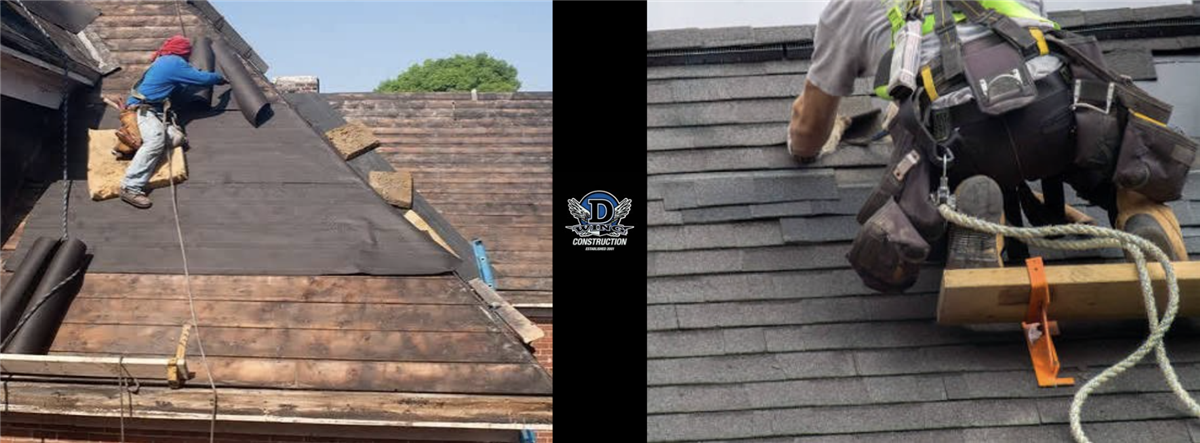
When you are facing a roofing problem, the cheapest option is almost always the most tempting one. That's completely understandable. But choosing the cheaper answer for the wrong reason is one of the easiest ways to turn your current problem into something much more expensive. The goal shouldn't be to spend less. It should be to make the right call the first time.
This is what actually drives that decision:
Age sets the table
Before we look at anything else, we want to know how old your roof is. Asphalt shingles - which is what most homes across Aurora, Naperville, the Fox Valley, and all throughout Chicagoland run - have a realistic lifespan of 20 to 30 years depending on the product, the quality of the installation, and what the Illinois weather has done to them over the years.
A roof under 15 years old with isolated damage, and we're almost talking repair. The material still has real life in it and a targeted fix makes the most sense. A roof pushing 20+ years is a different story. At that age the shingles have been through enough Illinois summers and winters that widespread wear is usually already showing up in multiple places. Repairing one area on a roof that's that age only buys time. It doesn't solve the problem in the long run.
Age alone doesn't make the decision. But it sets the table for every other conversation that follows.
The ground view almost always lies
A roof can look completely fine from the driveway but have real problems that only appear when somebody gets up there and gives an inspection. It happens all the time and is one of the main reasons we never give a repair or replacement opinion without doing a proper inspection first.
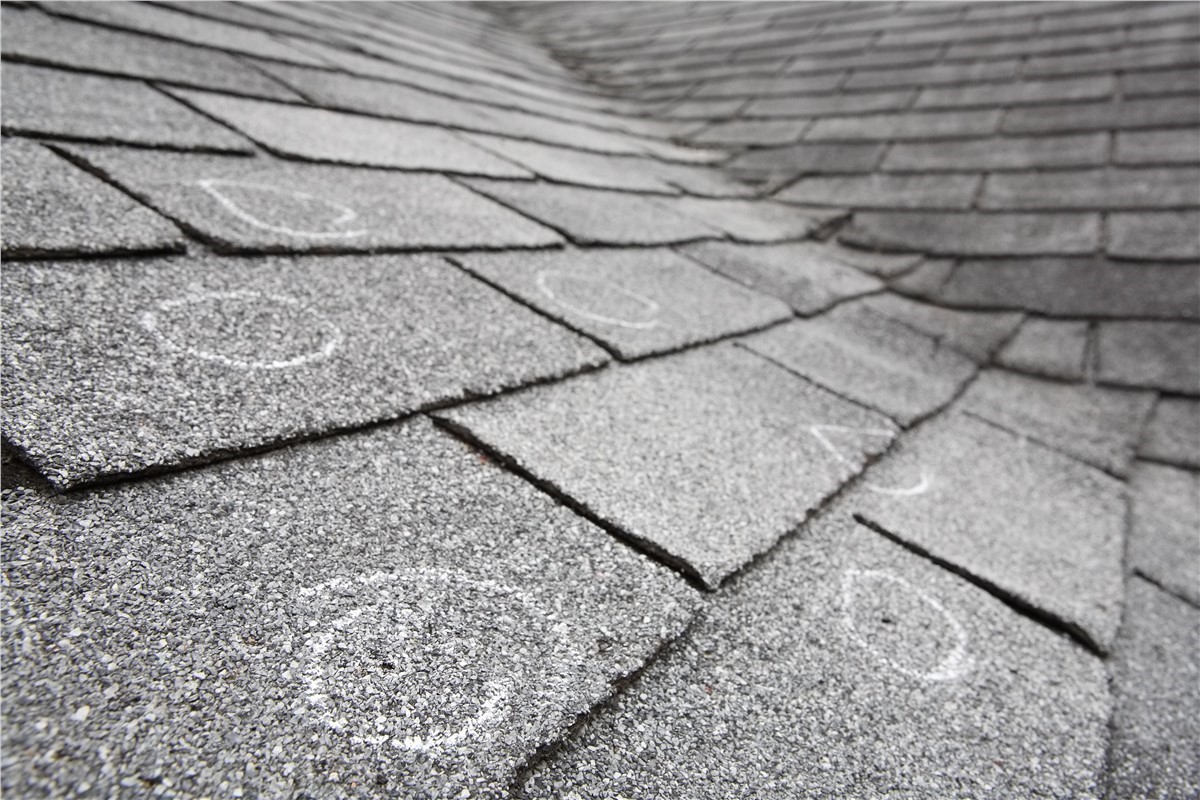
When we inspect a roof in Aurora or anywhere across the Fox Valley, we are always sure to look at the full picture, not just the obvious stuff. Isolated damage in one area, a few missing shingles, a flashing issue around a chimney, those are repair conversations. What changes is when the damage is showing up in multiple sections. Granule loss across several areas, shingles curling or cracking in more than one spot, flashing that has failed in multiple places. Granule loss in particular is something most homeowners don't notice until it's pointed out to them and by the time it's visible from the ground the shingles underneath have typically been compromised for some time
Widespread damage on an aging roof is not a repair situation. Patching individual problems at that stage gives the homeowner a false sense of security and costs them money twice. Once for the repair and once for the replacement that was always lurking.
What is underneath the shingles changes everything
It's important to not only think about your roof as just shingles. What matters just as much as the shingles on top, is the decking underneath. More importantly, the wood sheathing that everything else sits on top of.
Over time as water gets in, even slowly and in small amounts, the wood decking absorbs moisture and can start to rot. A roof with compromised decking is not a repair candidate no matter how the shingles look from the outside. New shingles on a soft or rotted deck is the recipe for disaster. When we find decking issues during an inspection, that information changes the entire recommendation and is something the homeowner must know before any final decision is made.
Insurance can change the math
Storm damage flips the financial equation in a way people often don't realize until it's too late.
If your roof sustained damage from a hail event or high winds - and we have had plenty of both this summer - that damage may qualify for a full replacement covered by your homeowner's insurance. If you get a repair done on a roof that actually qualified for a full insurance-covered replacement, you have paid out of pocket for something that should have cost you nothing beyond your deductible.
We have seen this happen on homes across Aurora and Naperville more times than we would like. Usually because the customer didn't know that the damage was as extensive as it was or didn't realize it was claimable. Getting a professional inspection done before you decide anything is the most important step, especially when insurance might be in the picture. It tells you what is actually on the roof and whether it meets the threshold for a claim before anyone picks up the phone with their insurance company.
The 50% rule
Here is a practical guideline worth knowing. If the cost of the repair exceeds 50% of what a full replacement would cost, replacement is almost always the smarter financial decision. You are spending most of the money anyway. A full replacement comes with new material warranties, a fresh lifespan, and none of the compromised areas a partial repair leaves behind.
Every roof is different and this rule doesn't need to be followed strictly, But when a repair estimate starts approaching that number, it is worth having an honest conversation about where your money is going.
The right call starts with the right inspection
The difference between a repair and a replacement isn't about what you want to spend. It's about what the roof needs. And you can't know that without understanding what to look at - age, extent of damage, condition of the decking, and whether storm damage puts insurance in the picture.
D-Wing has been making this call on roofs across Aurora, Naperville, Batavia, St. Charles, Geneva, and the Fox Valley since 2001. As an Owens Corning Platinum Preferred contractor we can offer warranty coverage that non-certified contractors can't. We will get on your roof, tell you exactly what we find, and give you our honest recommendation - repair or replacement, whatever actually makes sense for your home.
📞 (630) 556-8099 | Request your free roofing inspection at dwingconstruction.com →
Tags
Subscribe to D-Wing Windows, Siding & Roofing's Blog




Comments