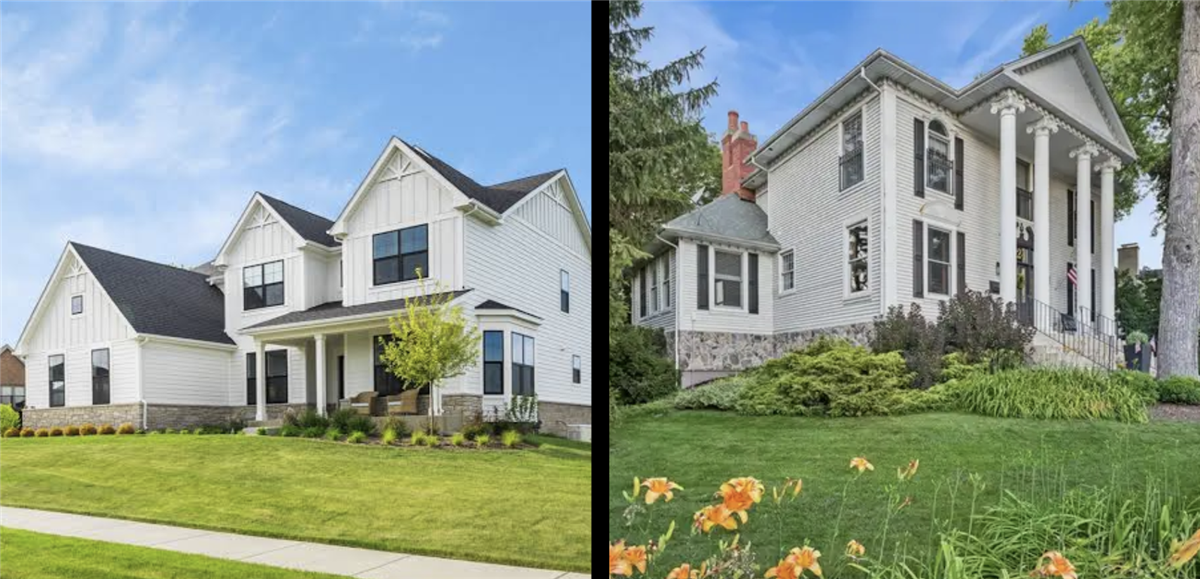
Spend an afternoon driving through Geneva and you will notice something that most suburbs do not have. Turn onto a street downtown or near the Fox River and you are looking at century old craftsman bungalows and Victorian homes with original woodwork, wavy glass windows, and front porches that have been there longer than most people have been alive. Drive out west toward Mill Creek and you are in a completely different world - large newer construction homes, open floor plans, walls of windows facing west, subdivisions that were cornfields twenty years ago.
Same city. Completely different homes. Completely different window problems.
Most window replacement content treats every home the same way and that is exactly why it does not feel useful to homeowners in Geneva. The conversation a historic home owner needs to have about windows is fundamentally different from the one a Mill Creek homeowner needs to have. So let's have both of them.
If your home is older and historic
Geneva's older downtown neighborhoods are genuinely special and the homeowners who live there know it. A lot of those homes still have their original wood frame windows and in some cases that is actually fine - well maintained original windows in a solid frame can be restored rather than replaced and there are situations where that is the right call. But most of the time when we get into an older Geneva home the windows have reached a point where restoration is no longer the practical answer.
Here is what tends to happen in older wood frame windows. The wood itself absorbs moisture over decades of Illinois winters and summers and eventually starts to rot, especially at the sill and the bottom corners where water sits. The glazing compound that holds the glass in the frame dries out and cracks, breaking the seal between the glass and the wood. Single pane glass - which most original windows are - provides almost no thermal resistance, meaning that beautiful old window is essentially a hole in your wall from an energy standpoint.
The concern we hear most from owners of historic Geneva homes is that they do not want to replace their original windows with something that looks wrong on the house. That is a completely legitimate concern and it is one worth taking seriously. A generic vinyl replacement window dropped into a 1910 craftsman looks exactly as wrong as it sounds. The profile is different, the sight lines are different, the way it reads from the street changes the whole character of the house.
This is where the product you choose matters as much as the decision to replace. Marvin makes window lines specifically designed to replicate historic profiles - the same sight line dimensions, the same grid patterns, the same exterior appearance as original wood windows - while performing the way a modern window should perform. You get a window that looks like it belongs on the house because it was designed to. Double pane glass with a low U-factor, proper weatherstripping, and a frame that is not going to rot out in another thirty years.
For historic Geneva homes the window replacement conversation is less about whether to replace and more about replacing with the right product so the home keeps looking like itself.
If your home is newer and larger
Mill Creek and Geneva's newer subdivisions present a completely different set of challenges and honestly a different set of priorities. These homes were built well but they were also built during periods when energy efficiency standards were not what they are today and builder grade windows were installed to hit a price point rather than perform at the highest level.
What we see in newer larger Geneva homes is usually one of a few things. Failed seals showing up as fogging between the panes on windows that face west or south where the sun exposure is most intense. Drafts around frames that were never perfectly installed from day one and have settled over the years. And in larger homes with a lot of west facing glass, solar heat gain in summer that makes certain rooms genuinely uncomfortable and drives up cooling costs significantly.
The energy efficiency conversation is much more prominent here than in historic homes. A larger newer home has more windows and more total glass area which means the performance of those windows has a proportionally bigger impact on monthly utility costs. Upgrading from builder grade double pane windows to a higher performance product with a better U-factor and solar heat gain coefficient can make a real difference in comfort and in what you are paying to heat and cool the house.
For Mill Creek and newer Geneva homeowners the replacement conversation is usually about performance and comfort first and appearance second. These homes can take a wider range of window styles without the historic character concern, which opens up more options in terms of product selection and price point.
What both types of Geneva homes have in common
Different homes, different concerns, but a few things are true across the board.
Illinois climate is hard on windows regardless of the home's age or style. The freeze thaw cycles, the temperature swings between January and July, and the humidity off the Fox River all accelerate seal failure and frame deterioration faster than more moderate climates would. Geneva homeowners are not being dramatic when they feel like their windows aged faster than expected - the climate genuinely does that.
Installation quality matters more than most homeowners realize. A great window installed poorly will still draft and leak. The frame needs to be properly flashed, sealed, and insulated during installation or you are back to the same problems within a few years. Knowing how to spot a quality contractor before you hire one applies just as much to window replacement as it does to any other exterior project.
And the decision to replace is almost always better made earlier rather than later. Windows that are actively leaking air or moisture are costing you money every month in energy losses and every season in accelerated damage to the surrounding framing and interior finishes. The same signs that tell you siding has gone past the point of repair apply to windows too - once moisture is getting into the structure around the frame the project scope grows beyond just the window itself.
How to know if it is time regardless of which Geneva neighborhood you are in
You feel drafts near closed and locked windows. You see fogging or condensation between the panes that does not wipe away. Your energy bills have been climbing without a clear explanation. Windows that used to open and close smoothly now stick, bind, or will not lock properly. You can see daylight around the frame from inside the house. Or you press on the wood around the frame and it gives - soft wood around a window frame means moisture has already been there long enough to do damage.
Any one of those is worth paying attention to. More than one and it is time to have someone come take a look.
We work on homes across Geneva from the historic river neighborhoods to Mill Creek and everything in between. Whether you are trying to preserve the character of an older home or improve the performance of a newer one, we are happy to come out and give you a straight read on what your windows actually need.
📞 (630) 556-8099 | Request your free window estimate at dwingconstruction.com →
Tags
Subscribe to D-Wing Windows, Siding & Roofing's Blog






Comments