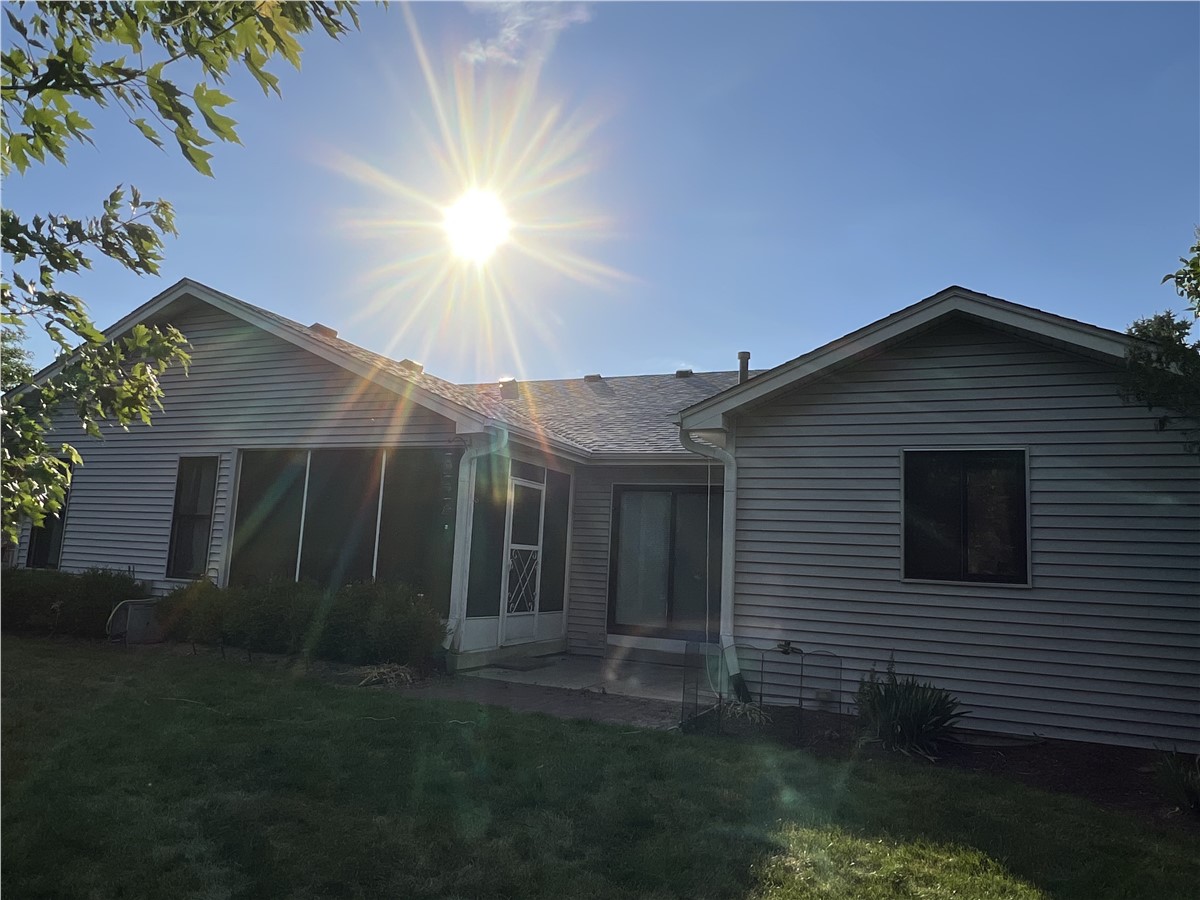
Walk around the outside of your house on a summer afternoon and really look at it. Not a quick glance from the driveway but actually get close to the wood trim, the soffits, the areas around windows and doors. If your paint is more than seven or eight years old there is a decent chance you are going to see something that has been quietly happening for a while. Fading, chalking, cracking, maybe some peeling in spots that face south or west where the sun hits hardest.
Most homeowners see that and think cosmetic problem. Fresh paint, looks better, done. What is actually happening is more important than that.
Exterior paint is your home's first line of defense against moisture
This is the part that changes how you think about a paint job. The wood framing, trim, and siding on your home are not naturally waterproof. Exterior paint is what keeps rain, humidity, and Illinois weather from getting into the material underneath. When that paint cracks, peels, or chalks past a certain point it stops sealing the surface effectively and moisture starts finding its way in.
Once moisture gets behind the paint and into the wood you are no longer talking about a painting project. It works the same way deteriorating siding can quietly let water into your home's structure long before you notice it from the outside. Rot means wood replacement before anyone picks up a brush, and a paint job that gets done on time costs a fraction of what deferred maintenance costs when the underlying material has to be addressed first.
Homeowners across St. Charles, Geneva, and the Fox Valley deal with this more than they realize because of how hard our climate is on exterior surfaces. Freeze thaw cycles through winter, intense UV exposure in summer, and the humidity swings in between put real stress on exterior paint year after year.
What failing paint actually looks like up close
Fading is the most obvious sign and also the most misleading one because it looks purely cosmetic. But fading means the resins in the paint that create the protective barrier have broken down from UV exposure. The color going is the visible symptom, the lost protection is the real problem.
Chalking is what happens when those same resins degrade and the pigment particles rise to the surface as a powdery residue. Run your hand across the siding and if it comes away chalky the paint has exceeded its useful life regardless of how it looks from the street.
Cracking and peeling are further along the same progression. At that point moisture has likely already gotten underneath and the paint is separating from the surface it is supposed to be protecting. Any area where you can see wood grain through cracked paint or where sections are lifting away from the surface needs attention sooner rather than later.
Pay particular attention to horizontal surfaces like window sills and the tops of door frames. Water sits on horizontal surfaces and paint fails there faster than anywhere else on the house.
Why a paint job fails in 3 years instead of 10
This is the part most homeowners do not know until they have experienced it firsthand. A paint job is only as good as the preparation underneath it. New paint applied over a surface that has not been properly cleaned, sanded, primed, and repaired is going to peel and fail early regardless of how premium the product is.
Professional exterior painting done right involves pressure washing and letting the surface fully dry, scraping and sanding any areas where existing paint has failed, priming bare wood before any topcoat goes on, and using a product rated for exterior exposure in a climate with real temperature extremes. Knowing how to spot a quality contractor before you hire one is worth understanding before you get any estimates, the difference in a paint job almost always comes down to what happens before the first coat goes on, not the paint itself.
Skip the prep steps and you are looking at a paint job that looks fine for a season and starts failing the next year.
Summer is actually one of the better times to do this
Exterior paint needs consistent dry temperatures to adhere and cure properly. Too cold and the paint does not bond correctly. Too humid and it will not dry at an even rate. The window between late spring and early fall in the Fox Valley is genuinely the best time of year to get exterior painting done, which makes right now a good time to at least get an estimate and get on a schedule before contractors book up for the season.
If your home is showing any of the signs above, the longer you wait the more likely it is that the painting project turns into a painting plus wood repair project. Getting ahead of it this summer is almost always the cheaper and easier path.
If you are in St. Charles, Geneva, Batavia, or anywhere in the Fox Valley and your exterior paint is overdue, we are happy to come take a look and give you a straight picture of what the house actually needs.
📞 (630) 556-8099 | Request your free estimate at dwingconstruction.com →
Tags
Subscribe to D-Wing Windows, Siding & Roofing's Blog





Comments